
This research project provides new knowledge about the views of children about their experiences of attending an intergenerational setting.
The project listens to children about their sense of identity and belonging in an intergenerational setting. It is led by Dr Kay Heslop and Dr Charmaine Agius Ferrante at Northumbria University.
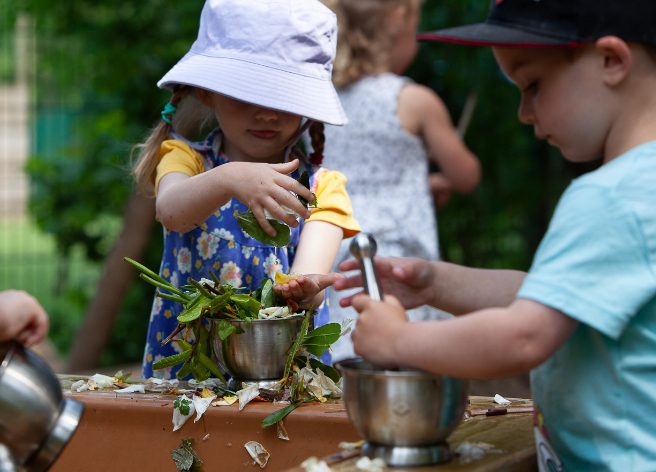
Ready Generations Nursery in Belong is fully integrated within the Belong Care Village in Chester UK. As part of the Nursery’s daily provision, babies and children are given the choice to enjoy regular time with their grandfriends, eating in the bistro, playing, learning together and sharing time outdoors in the garden or exploring the local community.
Children are given freedom to form friendships across generations and also learn from the wisdom of their older friends. This sense of connection and belonging is important and special for everyone.
Join us as we visit the setting to find out more about the opportunities children have in the care village.
About the project
Children and their grand-friends have been working and playing together for the past four years in an established intergenerational village which consists of a care village and fully integrated 0-5 nursery in Chester, England.
The Nursery in Belong is a Froebelian-inspired nursery where young children grow and are nurtured by both early years educators and their grand-friends who live in the intergenerational village. It is part of the national early years charity, Ready Generations. As part of the Nursery’s daily provision, babies and children are given the choice to enjoy regular time with their grandfriends, eating in the bistro, playing, learning together and sharing time outdoors in the garden or exploring the local community.
Many benefits have been presented in literature for children and older people who participate in intergenerational programmes. For instance, one literature review reported that the children involved showed improvements in psychological outcomes,
such as reduced stress and improved self‐confidence (Park, 2015) while Kirsh, Frydenberg and Deans (2021) reported socio‐emotional benefits for pre‐school children.
This research project involved listening to the voices of children about their sense of identity and belonging in this uniquely integrated setting. Researchers used the Mosaic Approach which views children as experts in their own lives (Clark and Moss, 2001).
Understanding the children’s perspectives about what matters most to them and brings them joy is helping to build professional expertise around intergenerational pedagogy.
The final report for the research project is now available.
Join us as we visit the setting to find out more about the opportunities children have in the care village.
About the research team
Dr. Kay Heslop and Dr. Charmaine Agius Ferrante share the role of Head of Education within the Department of Social Work, Education and Community Wellbeing at Northumbria University.
